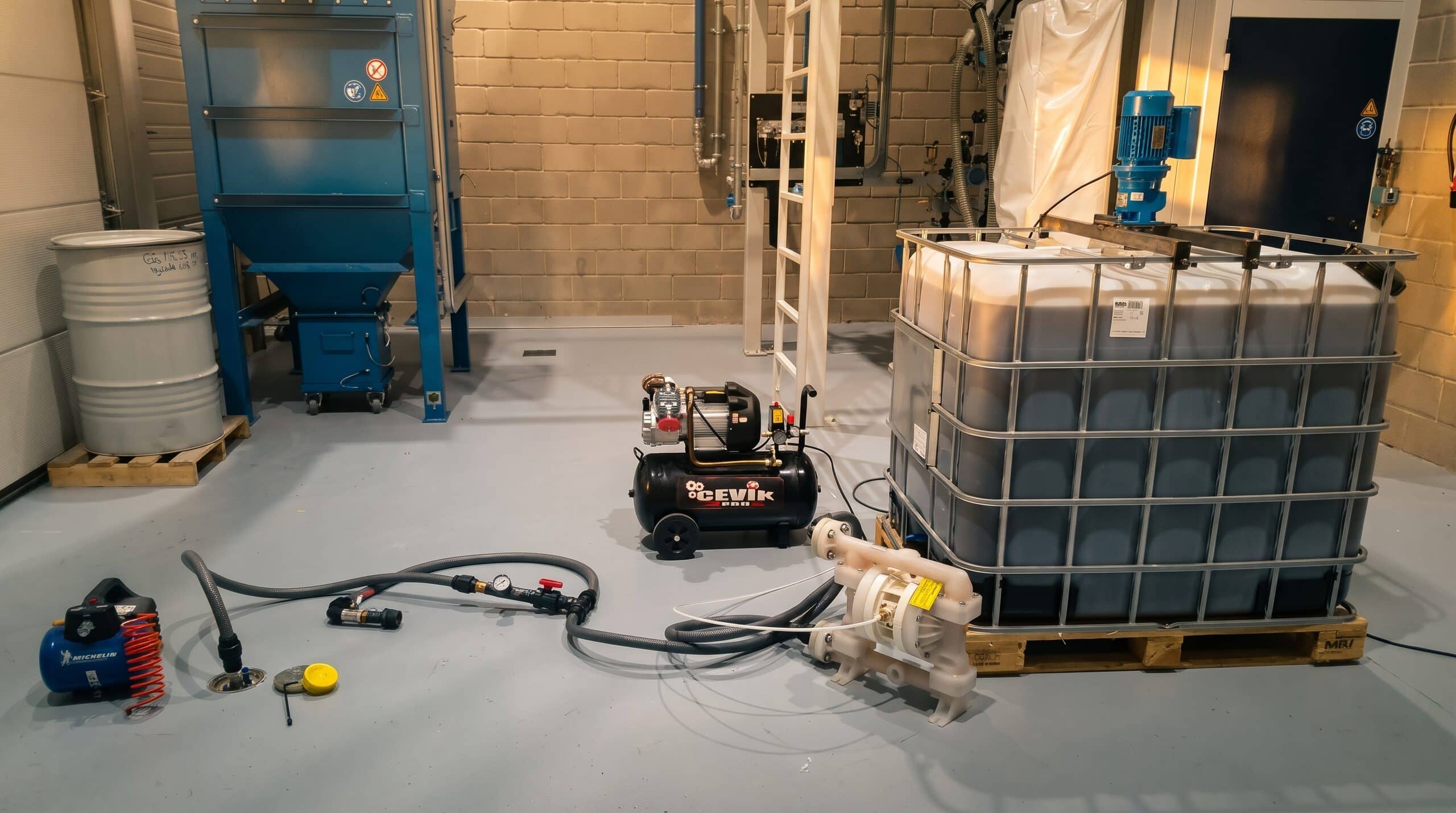
Reagent injection into piezometers or sleeve-port (manchette) pipes
Soil washing: surfactant injection
This involves injecting a blend of specific surfactants through the site’s piezometer network or drainage trenches, with the aim of mobilising into the Saturated Zone the petroleum hydrocarbons adsorbed onto the soil substrate in the so-called Unsaturated Zone or Vadose Zone, above the water table. Injections of Biostimulant S200 are also carried out, a product we distribute in Spain and about which you can find further information here.
SOILUTIONS formulates, develops and manufactures its own surfactants (Surfsoil and Soilact). They are highly biocompatible and fully biodegradable surfactants.
SOILUTIONS provides a comprehensive injection service, by both gravity and pressure. We travel to the specified location, after drawing up an action plan setting out the sequencing and location of injection volumes according to the characteristics of the site, and we deploy on site all the equipment needed to carry out the injections, always making the very most of existing resources.
Soil flushing is an essential tool for preventing the recurrent, though always unexpected and unwelcome, leaching that occurs throughout a project from the so-called secondary source, i.e. from the Vadose Zone of contaminated ground. Fluctuations in the water table, in most cases caused by heavy rainfall, lead to spikes in the concentrations of TPH and other analysed components, as a result of the slow but continuous transport of hydrocarbon particles down to the Saturated Zone.
Once we have achieved this soil washing effect and the contaminant is dissolved in the groundwater, we can act using different techniques:
- Bioremediation: through in situ stimulation of the bacterial strains that specifically degrade petroleum hydrocarbons. Addition of nutrients, oleophilic Biostimulant S200, oxygenating agents, etc.
- Pumping: extraction – discharge point or extraction – treatment.
- Successive injections: the application of surfactants causes mobilisation and dispersion of the contaminant (an aspect to bear in mind in terms of safety and ecological responsibility), as well as accelerating its degradation processes, as a result of the increased effective surface area of action (bioavailability) for the bacteria that metabolise petroleum hydrocarbons. Carrying out controlled periodic injections produces a progressive decrease in the concentrations of TPH and other analysable components in the medium to long term.
ISCO injections.
ISCO stands for In Situ Chemical Oxidation.
SOILUTIONS offers a comprehensive service for carrying out gravity or pressure injections of oxidising reagents, such as FENTON (Hydrogen Peroxide + Ferrous Sulphate), Sodium Persulphate, and Sodium or Potassium Permanganate.
In this type of work, Risk Prevention and Safety are fundamental given the hazardous nature of the chemicals involved. SOILUTIONS guarantees that the service is carried out under strict control, taking every precaution and making available to the project all the technical means at its disposal in terms of prevention, health and safety. SOILUTIONS technicians have extensive, demonstrable experience in carrying out this type of service in the field.
In situ chemical oxidation (ISCO) uses oxidising agents to chemically transform contaminants into mineralised products, degrading them to CO2 and readily biodegradable organic fragments. There are different methodologies depending on the oxidising agents and catalysts selected.
The classic Fenton process uses hydrogen peroxide (H2O2), also known simply as peroxide, which acts as the oxidising agent, and ferrous ion (Fe2+) as the catalyst. The role of Fe2+ is to decompose the H2O2 to produce hydroxyl radicals (OH•), which are the species that actually attack the contaminants.
Other widely used oxidising agents are sodium persulphate and potassium and/or sodium permanganate.
Gallery
4 photos